
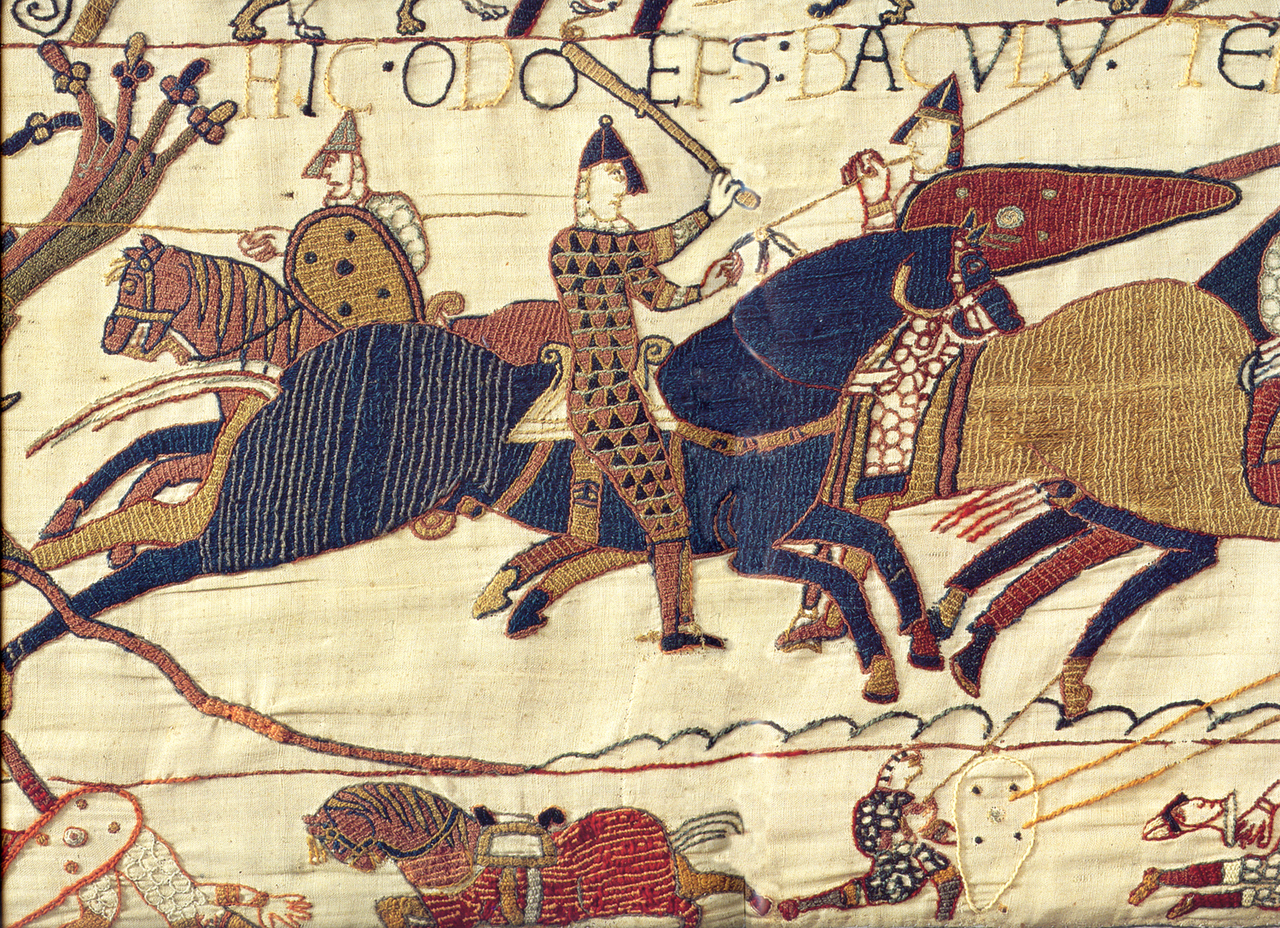
Embroiderers, made in the 11th Century, first
exhibited at The Bayeux Cathedral in 1077. https://en.wikipedia.org/wiki/Bayeux_Tapestry.
The Bayeux Tapestry is a cloth first exhibited at The Bayeux Cathedral in 1077; a mark in a turning point of history of France in England where William the Conqueror is in victory of the English circle at Hastings in 1066. A man in lead of a fleeting ship is in reason of expedition to rule another territory. A man is the first embroider, the women of pre-conquest embroider to follow. Man begins and woman continues. Power and reputation of Duke William as lord of dignity and physical prowess of Harold. Difference in credibility of being creates a line of authority.
Horse during that time are power and authority. They symbolise transportation, the power to expedite and conquer.
The embroidered cloth The Bayeux Tapestry depicts men on horses – primarily Norman invaders and Anglo-Saxon defenders. Depicted mainly men on horses. The key figures are Duke WIlliam of Normandy, King Harold Godwinson, and Bishop Odo. These horse-riders represent the 11th-century Norman cavalry, whose power was critical to the conquest.
The horses are rendered highly detailed. The 11th-century war technology includes the horse focused in many scenes in the tapestry, highlighting the importance of cavalry in the 1066 conflict.
Based on the historical records and depiction in the Bayeux Tapestry, women did not fight as soldiers in the Battle of Hastings in 1066. However, they were present in the tapestry’s narrative as witnesses, victims of the invasion, and key political figures behind the scenes. There are only three women out of 626 human figures depicted in the tapestry. This shows the male-dominated historical account of battleship in the British and French battleship and activity of horse-riding itself. Edith of Wessex, Aelfgyva, and anonymous woman and child are the few depicted in the cloth not as active participants in the combat.
The skilled English women in workships, possibly in Canterbury, are behind the embroidery, as scholars generally agree.